
Blood and Mortar
On Laying Fiction Over the Bones of History

There’s a question I get asked, usually by readers who’ve just finished a novel or story of mine and now find themselves in that strange, unsettled place between the world they were living in and this one. It comes in different forms, but it’s always the same question at its root: Looking back, how do you know what’s real?
My honest answer — the one I give when I’m not trying to sound like I know what the hell I’m doing — is that I don’t, not entirely.1 And that uncertainty, that productive friction between the documented and the invented, is where every historical novel I’ve ever cared about actually lives.
Let me show you what I mean by working through a problem I’m wrestling with right now.
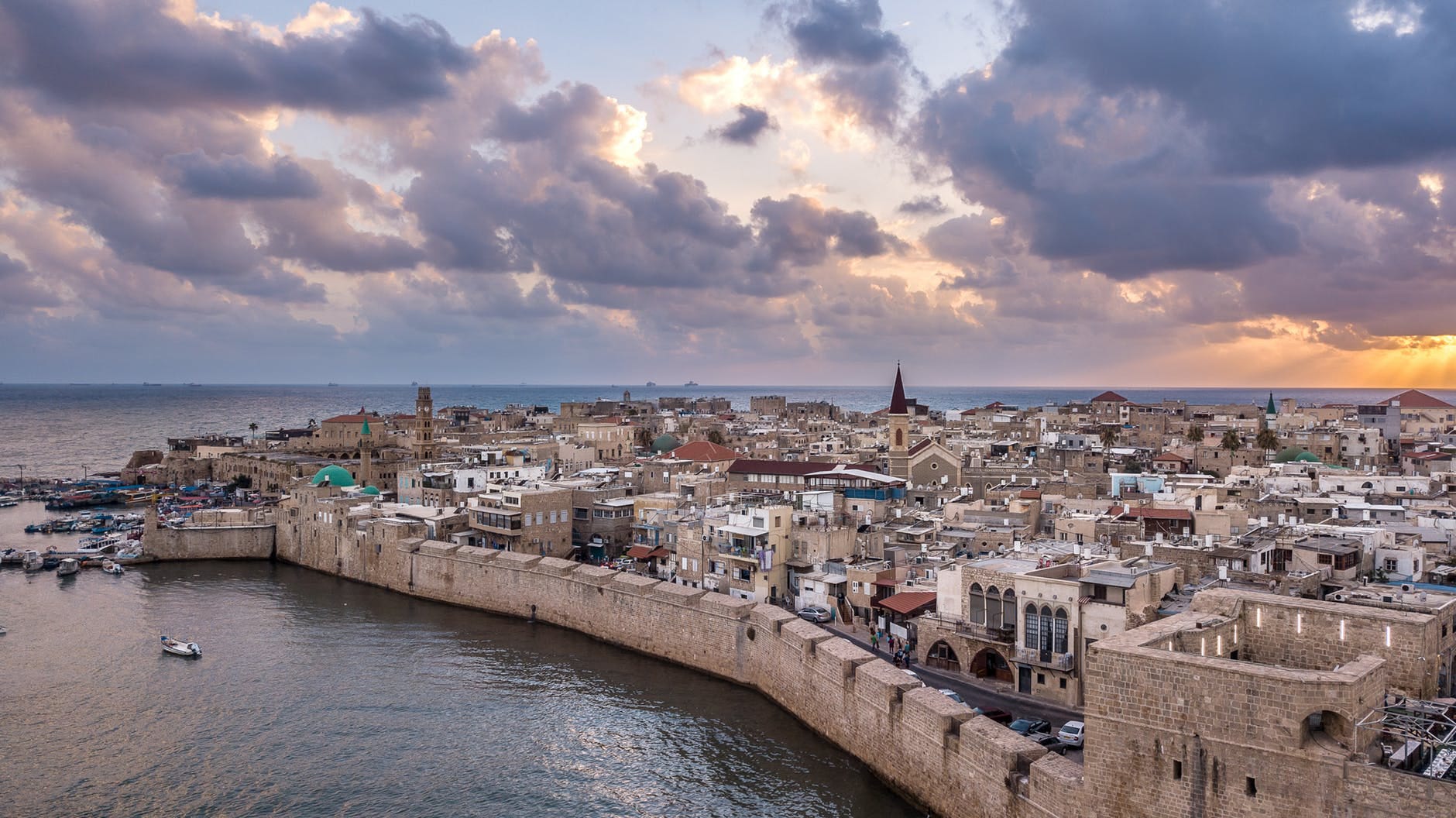
I’m writing about the fall of Acre. May 18th, 1291. The last major Christian city in the Holy Land, and the Crusader enterprise in the East with it. If you want a story soaked in consequence — tactical, spiritual, civilizational — you don’t need to invent stakes. History provides them in abundance. What history doesn’t provide is the interior life of a Venetian mercenary named Niccolò Caravallo; he’s the one I’ll be dropping into this world and asking to carry my novel on his back.
That’s the central bargain of historical fiction, and it’s worth being honest about how precarious it is.
The Timeline Is Your Skeleton. Respect It.
The first thing I do with any period I’m writing about is build a chronology as granular as the sources will allow. Not the broad strokes — “the Crusades,” “the fall of Outremer” — but the actual sequence of cause and effect, the specific weeks and months when individual decisions were made, when individual men died, and when the world tilted because of it.
For this exercise, I’m going to focus on the events that lead up to the start of the siege; they run something like this:
In April of 1290, a crusading fleet arrived at Acre, exhorted by a papal bull to take up the Cross. Most of those ships turned around almost immediately. They left behind roughly sixteen hundred men — a cross-section of knights, adventurers, mercenaries, and peasants who had no particular plan and no particular commander. By August, that idle mob had grown dangerous. They rampaged through a market quarter and slaughtered every Saracen they found.
This massacre is the hinge on which everything else turns.
Sultan Qalawun, who had maintained a tense but functional truce with the Franks for years, demanded that the perpetrators be handed over. The Templar Grand Master, Guillaume de Beaujeau — a man of genuine political sophistication — proposed a dark piece of statecraft: send the Sultan the criminals already awaiting execution in Acre’s prisons. They’d die anyway. Let their deaths purchase the city’s peace. Prince Amalric and the ruling council refused. You did not hand Christians to Muslims. The principle held. The truce did not.
Qalawun began preparations for war in October. In November, he died.
His son, al-Ashraf Khalil, took the throne on the 11th of November and spent the next week consolidating power by killing everyone who might contest it — including the viceroy of Egypt and several senior emirs. Then he issued orders for a spring offensive and sent a letter to de Beaujeau stating his intentions in plain terms. The council of Acre, reading that letter, still found ways to disbelieve it.
January 1291: a final delegation went to Alexandria. Khalil imprisoned them when they refused to surrender the city.
March 6th: Khalil’s army departed Cairo. The chronicles describe the mood as something akin to a religious fever — prophecy and purpose moving in tandem through the ranks. Advance forces reached the approaches to Acre and began skirmishing with local cavalry.
April 1st through the 9th: Khalil himself arrived. His great red tent — the dihliz, the formal standard of a sultan in the field — went up on a nearby hill. It took nine days to arrange the siege works. Nine days of watching, and no organized effort to stop him.
That is my skeleton. Every date in that sequence is documented. The decisions, the deaths, the letters — they happened. And if I depart from them carelessly, my novel ceases to be historical fiction and becomes something else. Fantasy with period costuming.
Where Your Character Arrives Determines Everything
Now here’s where the craft becomes genuinely hard, and where I’ve spent the most time recently.
Niccolò Caravallo is fictional. He didn’t massacre anyone in that market, and he didn’t sign any letters. He’s not beholden to anyone; in story terms, when we first meet him, he has agency: he’s free to move about the board as I see fit, mine to dispose of as the story requires. But when he arrives in Acre, that decision has structural consequences that ripple through every chapter I write.
The question I keep asking myself is this: do I bring him in with the April fleet, giving myself a full year before the siege to establish him in the city, introduce the cast, let the world breathe? Or do I drop him into the August chaos, into the smoke and the screaming of that market massacre, and let the ticking start immediately?
I keep coming back to August.
Here’s why: the massacre is not just a dramatic event. It is the last moment of genuine choice in this story. After the council refuses Qalawun’s demand, events move with a kind of terrible momentum. Sultan Qalawun dies. His son Khalil takes power and has fewer reasons to practice restraint. The delegations fail. The army marches. There is still human agency in all of it — de Beaujeau is playing a complex game right up until his death during the siege — but the window for a different outcome closes, quietly and permanently, somewhere in September of 1290.
If Caravallo witnesses that massacre, he witnesses the moment the door shuts. He can spend the next six months — six chapters, roughly — watching Acre’s leadership make every wrong decision with complete confidence. He can see de Beaujeau’s political genius straining against a council that mistakes stubbornness for honor. He can watch a city that has forgotten how to survive. He can meet the other fictional inhabitants: the old doctor and his niece, the leader of the lepers, the fallen merchant and his German courtesan . . . faces that will come to mean something as the siege progresses.
This, to me, is better than a year of setup. The ticking bomb doesn’t dampen when you arrive late — it sharpens. Because the reader, like Caravallo, can feel how little time remains.
The Fictional Characters Need Real Ballast
Caravallo moves through a world populated by people who actually existed, and that requires constant care. Guillaume de Beaujeau is not a cipher I can bend to the plot’s convenience. He was a specific man who made specific choices, and whatever I invent about his private conversations or interior doubts has to remain consistent with his documented behavior. I can imagine what he said in the moments the chronicles don’t record. I cannot contradict what they do.
The same goes for Prince Amalric. For Sultan Khalil. For the emirs whose names appear in the Arabic sources but not the Latin ones.
Where I have room — generous room — is in the spaces history leaves dark. The chronicles don’t tell me who Caravallo spoke to on the night of August 15th, 1290. They don’t tell me what the air smelled like on the Venetian quarter’s waterfront, or what a man felt when he first realized the leprosy moving through his body wasn’t going to stop. That space is mine. History rents it to me on the condition that I don’t break anything structural while I’m in it.
There’s also the question of what I call dramatic compression — the novelist’s eternal temptation to have the right people in the same room at the same time. History rarely cooperates. Caravallo and de Beaujeau may never have spoken. Ramòn de Bas, the antagonist, arrives with King Henry twelve days into the siege — he’s not in Acre during that six-month prelude. So I have to build a web of connections that feels organic, that puts fictional characters in documented scenes without requiring the documented figures to behave like plot devices.
The trick is to use the historical record as a stage, not a script. The stage is fixed. The props are real. Who stands on it, what they say to each other, why they stay . . . that’s the novelist’s work.
I want to open the book in Messina. A summer storm. Caravallo clashing with an arrogant Castilian, Ramòn de Bas, over a game of dice, an antagonism that won’t resolve until Acre’s walls are coming down; then reacquainting himself with Enrico Tiepolo, who will become his unlikely anchor in the chaos ahead. Tiepolo, in their first real conversation, reads the signs on Caravallo’s hands and knows the secret he’s hiding.
That prologue is entirely invented. Everyone in it is utterly fictional.
However, the historical record indicates that ships were moving between Messina, Crete, Cyprus, and Acre in the summer of 1290. The Venetian community in Acre was real and active. The leprosy afflicting Caravallo, that would have been moving through any port city in the Mediterranean? Also real. The politics between the Italian merchant communities and the Crusader nobility in Acre are well-documented, contentious, and can serve as grist for the fiction mill.
So I’m not inventing a world. I’m inventing the people who moved through one that actually existed. The difference sounds modest. It isn’t. When a reader trusts the world, they extend that trust to the characters inside it. When they feel the author making things up at the level of setting and event, the fictional characters lose their traction.
This is why research must always lead, and why it never fully ends. Know what history won’t let you break before you start to build — it’s the foundation beneath every real fictional world.
What the Siege Teaches
The fall of Acre is a story about what happens when the thing you’re defending stops being a city and becomes a symbol. The council refuses to hand over the perpetrators of that market massacre not because they’ve made a careful strategic calculation, but because the idea of surrendering Christians to Muslim judgment is intolerable. The idea matters more than the consequences. And the consequences come anyway.
That’s the kind of tragedy historical fiction is best equipped to handle; not contingent tragedy, where things might have gone differently if only, but structural tragedy, where you can see the ending coming from miles away and still can’t look away. Where the characters are not stupid or evil, just human, and humanly incapable of seeing past the thing they believe in.
Caravallo will watch it happen. He’s going to try to stop some of it, and he’ll be wrong about which parts he can stop. He’ll be right about other things, and it won’t matter.
The siege will come regardless.
This is history’s gift to fiction: pure invention can never match the terrible weight of a thing that has already happened. You don’t need to manufacture dread when the date is already fixed. You just need to put someone inside who lets us feel it, all these centuries removed.
One thing you must know: sources lie. Ancient and Medieval writers did not craft pure non-fiction, pure history. They lived in the twilight world between truth and fiction, fabricating situations to make their faction look better, to bolster belief, or to flatter their patron. Between textual records and archaeological evidence, we can come close to the truth of the matter, but there’s always that grain of doubt around which pearls of modern fiction are layered.
This is spot on. You can’t make something that we know happened in X happen in Y instead. Like you say, there is enough wiggle room in history already!
For some reason it is less annoying when HBO’s Rome does it. My favourite was Servilia killing herself outside Atia’s front door.
Man i can't wait to read this