
Forging Ahead
The Venetian Continues . . .

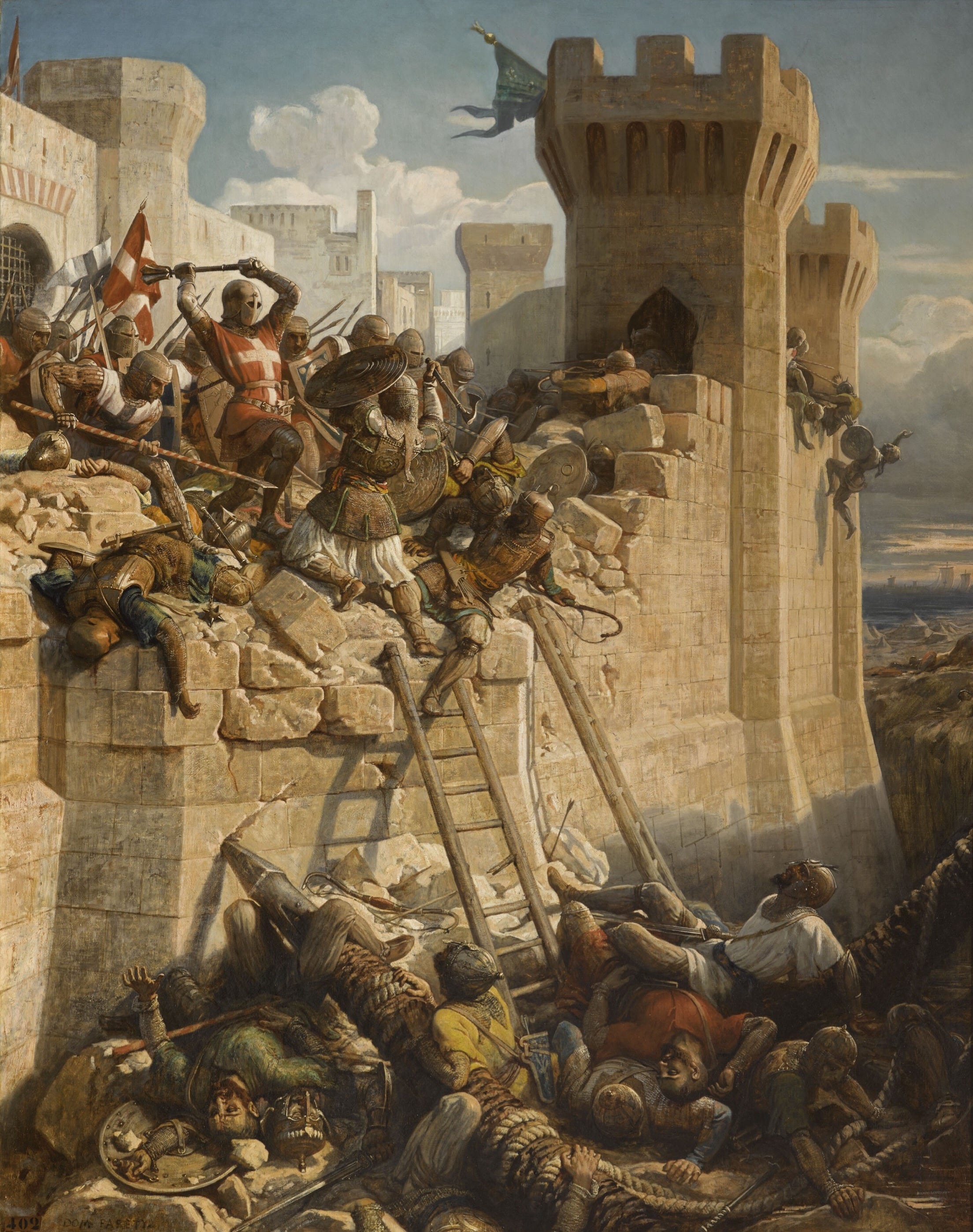
After a bit of a break and an enthusiastic thumb’s up from my agent, I’m back to work on The Venetian. I’ve finished the prologue and I’m now in the early section of Chapter One. As I see it in my head, the first three chapters deal with Caravallo’s sojourn in Messina as a mercenary during a time of peace (short-lived though it was). He muses on his father and brother, and on his long-term association with a man named Giacomo Tiepolo, the ambitious son of a former Doge of Venice. Chapter Three will be the events that lead to Caravallo’s flight from Messina and into the crucible of Acre.
Here’s the opening to Chapter One:
###
The goddess Fortuna is blind, or so Cicero tells us; blind, mad and stupid, to boot. A captive of vagrant winds, she hurls herself headlong like an unmoored sail, draping her favors over any witless fool who happens into her path. And this fool — who might be a just and moral man, or a miserable bastard and a skinflint — she builds up; she makes him drunk on good fortune, and propels him to the very gates of Heaven. As a patroness, however, the goddess lacks a certain sense of wisdom: she cannot discern the worthy from the unworthy; what Cicero mistakes for madness is nothing more than evidence of the goddess’s frustrations, manifesting as cruelty, uncertainty, and inconsistency — for what is she if not a slave, herself, to Fate’s fickle whims?
But what becomes of the man caught in Fortuna’s embrace when the winds that guide her blow contrary? Just like that, he goes from the sublime glow of success to the shrieking bowels of misery. From aspiration’s pinnacle to the gutter . . . or the grave. We have all seen the wreckage. Even here, in fair and silent Mystras, you can find the empty shells of Fortuna’s passing: broken-down and rag-clad; beggars with the sores of the road and the scars of the past, whose eyes have seen the Glory . . .
I see myself in their rheumy gazes — the whitish tracery of old wounds like a ledger of the flesh, tallying triumph and tragedy; the slight limp earned from shards of falling masonry, the distant stare borne of too much slaughter. Old soldiers recognize their own. I give them a coin and they bless me in return. “Rota Fortunae, captain,” one in ten will mutter. And I know, then, that I’ve found one of my own.
So far, so good . . .